



The short answer: the Pushkar Camel Fair 2026 runs from 17 to 24 November, closing on Kartik Purnima on Tuesday 24 November — the dates listed on Rajasthan Tourism's official festival calendar. Go on 17–20 November for the camels and the trading, 21–23 November for the competitions and the biggest crowds, and 24 November only if the holy dip is the point of your trip. Pushkar is about 145 km from Jaipur, roughly three hours by road, and three nights over the Guru Nanak Jayanti long weekend (21–24 November) need just one day of leave. Book your room or fair camp before anything else — it is the first thing to run out.
Most guides treat the Pushkar fair as one event. It is really three sharing a week and a stretch of sand on the edge of town: a working livestock market that starts before the tourists arrive, a festival of competitions and concerts run by the state tourism department in the middle, and one of Rajasthan's biggest pilgrimage days at the end. Which of the three you want decides which dates you book.
This page is the 2026 planner — dates, the shape of the week, where to stay, costs and a three-night plan from Jaipur. For the town itself — the Brahma Temple, the 52 ghats and the quieter Pushkar outside fair week — read our Pushkar travel guide.
Pushkar Camel Fair 2026 dates — and why they change every year
The fair follows the Hindu lunar calendar. It belongs to the month of Kartik and always ends on Kartik Purnima, the full moon, so its dates drift by up to three weeks from one year to the next. In 2025 it fell across late October and early November; in 2026 it runs from 17 to 24 November.
Rajasthan Tourism lists the 2026 fair on its official fairs and festivals calendar as 17–24 November, and the Government of India's Incredible India event page carries the same dates with no entry ticket. The event-by-event programme — which competition happens on which morning — is usually published by the tourism department closer to the fair.
Which days to go: camels, competitions or Kartik Purnima
Choose your dates by what you want to see, not by which days happen to be free. The fair changes character across the week. If you are still choosing between seasons altogether, our best time to visit Rajasthan guide compares the whole year.
17–20 November: the livestock fair
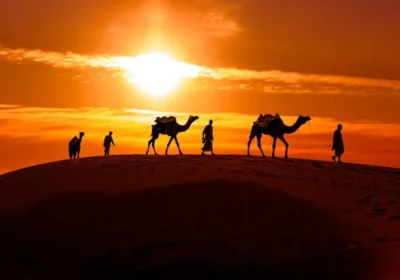
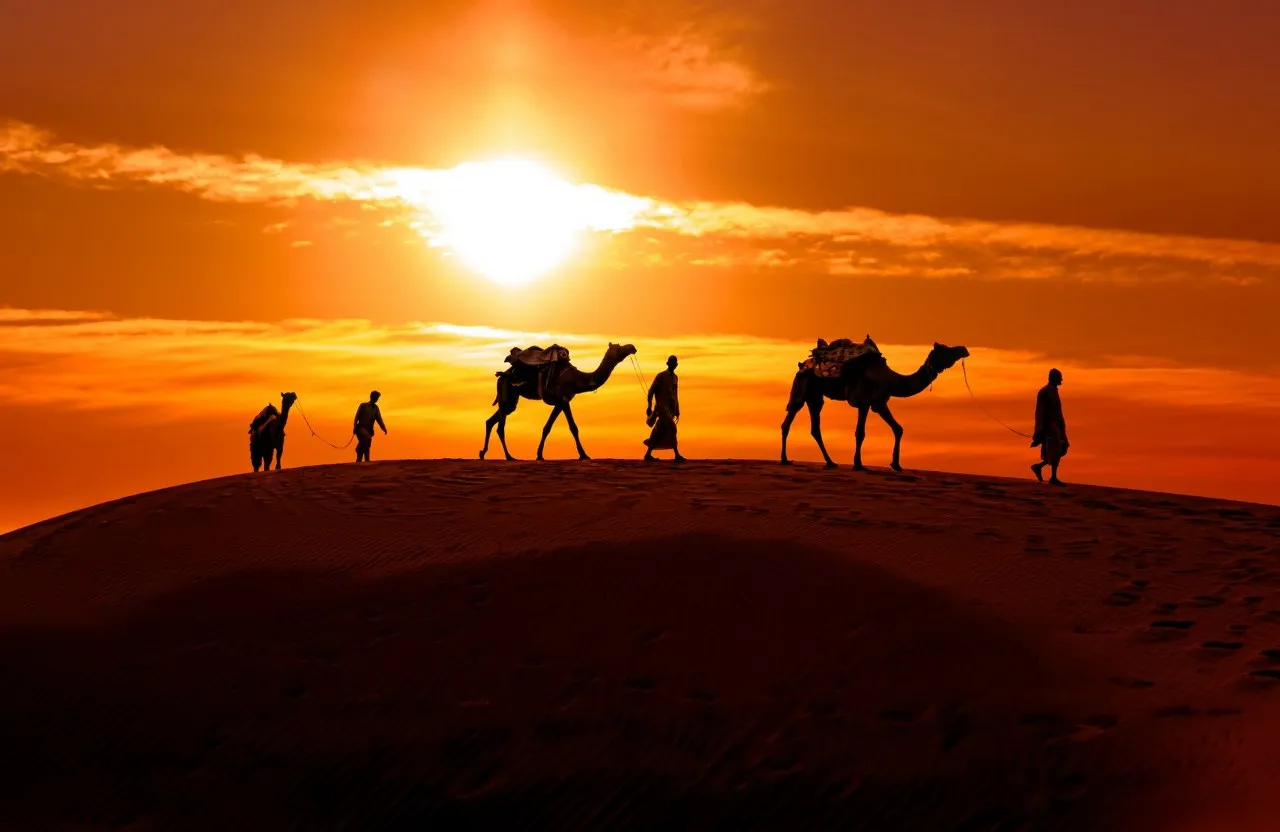
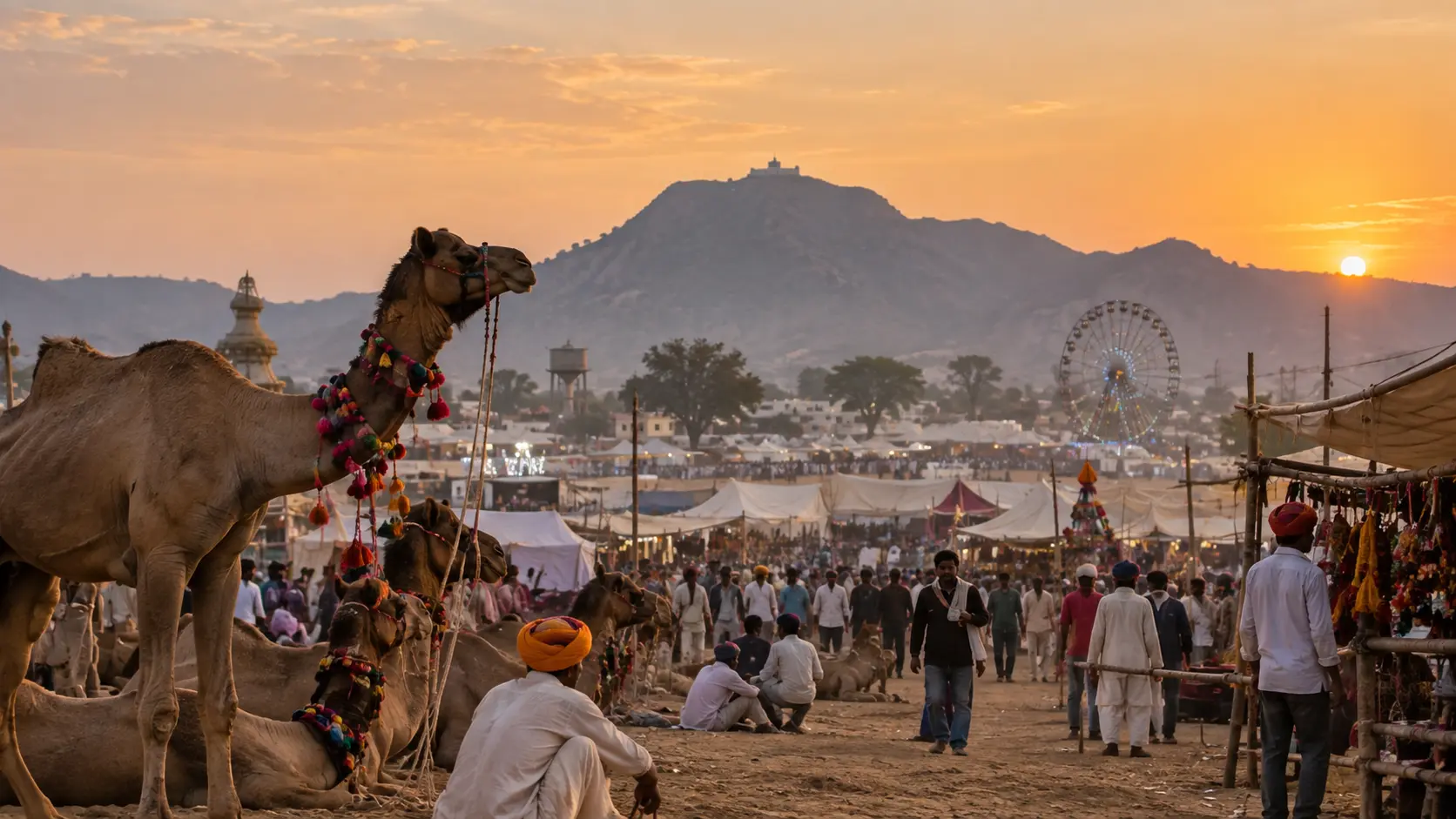
The first days belong to the herders. Camels, horses and cattle arrive from across Rajasthan and neighbouring states, camps spread across the dunes around the mela ground, and the trading is at its busiest. This is the photographers' window — sunrise over the camel camps, cooking fires, animals being groomed and decorated — and it has the lightest crowds and the easiest rooms of the week. Weekdays at the start of the fair are the calmest days of all.
21–23 November: competitions and the peak weekend
The festival programme fills the second half of the week. Rajasthan Tourism describes competitions such as matka phod, the longest moustache and the bridal competition as the main draws, alongside camel decoration, rural sports and evening cultural shows at the mela ground. In 2026 these days fall on the Guru Nanak Jayanti long weekend, so expect Pushkar at its fullest. By now much of the livestock trading is done and fewer herds remain.
24 November: Kartik Purnima and the holy dip
The last day is religious rather than touristic. Pilgrims bathe in the lake before dawn — Rajasthan Tourism notes the belief that bathing in Pushkar Lake on Kartik Poornima washes away sins — and the ghats are packed shoulder to shoulder. It is extraordinary to witness and it is the hardest day of the year to move around Pushkar. Families with small children or older travellers should watch from a quieter ghat, or leave the day before.
What actually happens at the fair
The programme changes a little every year, but the fixtures are consistent — and they are a good introduction to Rajasthan's traditions and festivals in a single week:
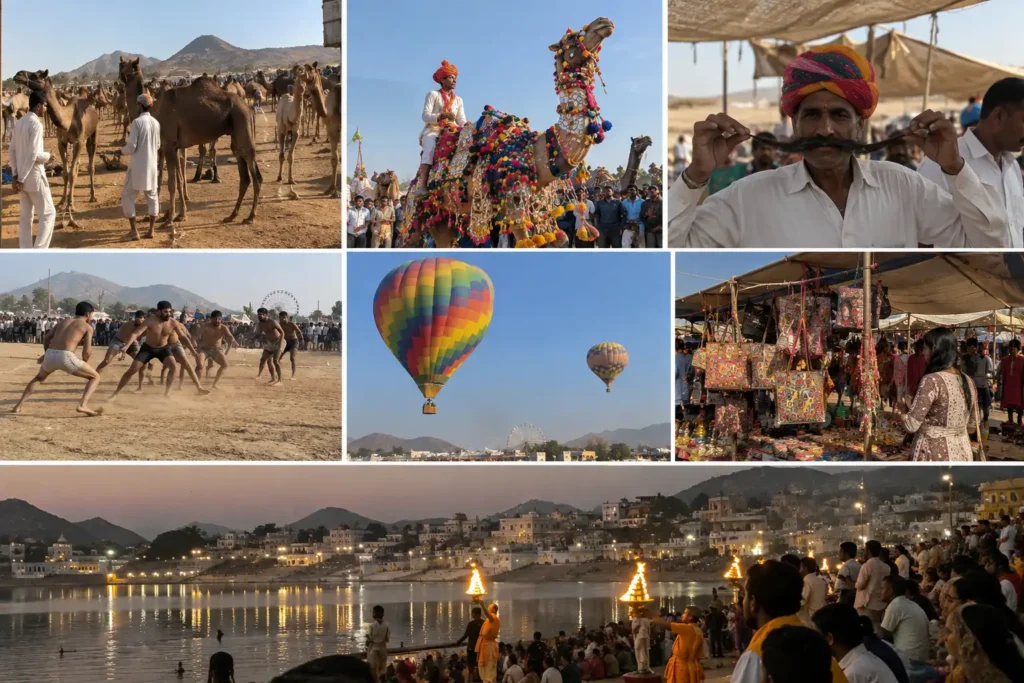
• Livestock trading — the original purpose of the fair, busiest in the first days.
• Camel decoration, camel dance and horse dance contests on the mela ground.
• The longest-moustache, turban-tying and bridal competitions — the most photographed events of the week.
• Matka phod and rural sports such as kabaddi and tug-of-war, including the locals-versus-visitors match.
• Hot-air balloon flights at dawn and late afternoon, run by operators and paid separately.
• A handicrafts bazaar and evening cultural performances of Rajasthani folk music and dance.
• Maha aarti at the ghats as the fair builds towards Kartik Purnima.
Where to stay in Pushkar during fair week
Accommodation, not transport, is what limits a fair-week trip. Fair week is the busiest week of Pushkar's year and every category fills, so choose between these three options early.
Fair camps beside the mela ground
Tented camps go up on the edge of the fairground for the season, and they are the classic fair-week stay. You walk out to the sunrise camel camps; you also get dust, generator noise and early mornings. Tents range from basic to luxury, so check whether yours has an attached bathroom and proper bedding for cold November nights.
Hotels and havelis in town
Hotels near the lake are quieter and closer to the ghats, temples and cafés, and a short walk or rickshaw ride from the fairground. Pushkar is also a popular wedding town in November, so ask for a room away from any lawn or banquet hall if you sleep lightly.
Staying in Ajmer instead
If Pushkar is full, Ajmer is 15 km away over the Nag Pahar pass and has far more rooms. The trade-off is a 30-minute drive each way and slow traffic into Pushkar on the peak days — worth it only if you have your own car.
How to get to the Pushkar fair from Jaipur and Delhi
By road from Jaipur: about 145 km, roughly three hours via Ajmer. A private car is the easiest way to handle fair-week traffic and pre-dawn starts, and our Jaipur to Pushkar cab is priced before you travel.
By train: the nearest major station is Ajmer Junction, about 15 km from Pushkar, with frequent trains from Jaipur and Delhi. Book on IRCTC as early as you can for fair week, then take a taxi or bus over the pass.
By air: Kishangarh is the nearest airport, about 30 km away, but it has few flights. Most visitors fly into Jaipur and drive.
From Delhi or NCR: break the journey in Jaipur rather than driving more than 400 km straight into fair traffic. Our Delhi to Jaipur cab guide covers the first leg.
Pushkar Camel Fair 2026 itinerary: three nights from Jaipur
This plan uses the Guru Nanak Jayanti long weekend, so it needs only Monday 23 November off. It is timed around the light and the crowds rather than a checklist — and it is one of five breaks in our guide to long weekends from October to December 2026.
Day 1 — Saturday 21 November: Ajmer Sharif and the camps at dusk
Leave Jaipur by 9am. Stop in Ajmer for the Ajmer Sharif Dargah — dress modestly and carry a scarf — then cross the Nag Pahar pass to Pushkar. Check in and walk to the mela ground in the late afternoon, as herders settle their camels for the night. Sunset aarti at Varaha Ghat, dinner, and an early night. With a spare day before the fair, spend it in Jaipur — our Jaipur travel guide covers what to see.
Day 2 — Sunday 22 November: sunrise camel camps and the Brahma Temple
Be at the camel camps before sunrise — this is the hour the whole trip is built around. Back for breakfast, then the Brahma Temple and the ghats before the midday heat. Rest through the afternoon, when the fairground is dusty and glaring, and return for the late-afternoon events and the evening cultural programme.
Day 3 — Monday 23 November: competitions, a camel cart and Savitri at sunset
Spend the morning at the competitions — check the programme the evening before. After lunch, take a camel cart out to the dunes on the edge of town (agree the price and duration first), then take the ropeway or climb to Savitri Temple for sunset over the lake and the fair.
Day 4 — Tuesday 24 November: Kartik Purnima at dawn, then home
If you want to see the holy dip, go before first light and watch from the edge of a quieter ghat. Check out by 10am — traffic out of Pushkar builds all morning on Kartik Purnima — and you will be back in Jaipur by mid-afternoon.
What the Pushkar Camel Fair 2026 costs
The fair itself is free. What you pay for is the room, the transport and a handful of extras:
• Fairground entry: free — the Incredible India listing shows no ticket.
• Jaipur–Pushkar car: fixed fares on the cab page, starting from ₹2,499.
• Fair-week rooms and camps: the biggest cost, and the one that rises most around the final weekend and Kartik Purnima.
• Extras: hot-air balloon flights, camel cart rides, the Savitri ropeway, and tips for posed portraits.
• A private three-night trip from Jaipur with car, stay and breakfast is quoted on request, plus 5% GST.
For the rest of the state's autumn calendar — Dussehra, Diwali and the smaller fairs — see Rajasthan in October and November 2026.
Photography and etiquette at the fair
• Ask before photographing herders, women and sadhus, and expect some to ask for money if they pose.
• Never photograph people bathing at the ghats.
• Keep clear of animals being traded — a camel that shies can knock you over.
• Leave the drone at home; flying over crowds and livestock is unsafe.
• Dust gets into everything: carry a lens cloth and a scarf for your face.
Pushkar fair week with children or older parents
The fair is a good family trip if you plan around three things: heat, crowds and walking. Mornings at the camel camps are cool and spacious; by midday the ground is dusty and the light is harsh, so plan a long lunch and a rest at the hotel. The walk from town to the mela ground is sandy, and the lanes around the ghats are narrow and crowded in fair week
• Stay close to where you will spend your mornings — a camp by the mela ground or a hotel near the lake, not Ajmer.
• Keep a car on call so anyone can head back for a rest without negotiating a ride.
• Choose 18–20 November if you can — the fair is in full swing, but the weekend crowds have not arrived.
• Watch Kartik Purnima from a distance — the ghats that morning are no place for small children or anyone unsteady on steps.
Fair-week mistakes to avoid
• Arriving on Kartik Purnima morning. Roads in are at their slowest and the ghats at their fullest — arrive at least a day earlier.
• Not agreeing prices first. Camel rides, carts and photo poses all have prices; settle them before, not after.
• Getting pulled into a "puja" at the ghats. An offer of flowers and a blessing can end in a demand for a large donation; the donation section of our Pushkar travel guide explains how to decline politely.
• Expecting a beer. Pushkar is a holy town — alcohol, meat and eggs are not sold, fair week included.
• Carrying only cards. Many stalls and cart drivers deal in cash, so keep small notes.
Frequently asked questions
When is the Pushkar Camel Fair in 2026?
What is the best day to visit the Pushkar Fair in 2026?
Is there an entry fee for the Pushkar Fair?
How far is Pushkar from Jaipur?
Can I visit the Pushkar Fair as a day trip from Jaipur?
Where should I stay during the Pushkar Fair?
Is the Pushkar Fair good for families?
Can you drink alcohol at the Pushkar Fair?
Do foreign visitors need anything special for the Pushkar Fair?
Is Kartik Purnima at Pushkar a pilgrimage?
How early should I book for the Pushkar Fair?
What should I wear to the Pushkar Fair?
Plan your Pushkar Camel Fair trip with Root Indians
The fair rewards people who arrive a day early, stand in the right place at sunrise and have a car waiting when the crowds build. That is the part we plan.
Root Indians is based in Jaipur, three hours from Pushkar. We arrange fair-week trips as a single overnight, as the three-night long-weekend plan above, or as part of our Rajasthan tour packages with Jodhpur and Udaipur after the fair — our Jodhpur travel guide covers the next stop..
Browse our cab routes across Rajasthan if you only need the transfers, or call +91 78777 38437 and tell us your dates for a custom itinerary within 24 hours.