


Jaisalmer Travel Guide 2026: Golden Fort, Desert Camps & Costs
The short answer: two days and one desert night is right for Jaisalmer. Day one is the fort and the havelis, day two is Kuldhara and a night at a camp near Sam or Khuri. November to February is the only season that reliably works; February is the best month in it. Budget roughly ₹2,000 a day per person plus the camp, which is a separate line item running anywhere from ₹1,500 to ₹30,000 depending on tier. The single decision that determines whether the trip is memorable is which camp you book, and it is the one thing most itineraries leave to whoever is selling at the dune.
There is a moment about forty minutes before you reach Jaisalmer when the landscape gives up entirely. No trees, no fields, no villages — just flat yellow scrub running to the horizon in every direction, the occasional windmill, the occasional camel. Then a shape appears on a low hill ahead, and it takes a few seconds to accept that it is a city.
Jaisalmer is the last stop. Beyond it there is desert, then the Pakistan border, then more desert. Rawal Jaisal founded the fort in 1156 on Trikuta hill, and for six hundred years the town underneath grew rich taxing camel caravans carrying silk, opium and spices between India and Central Asia. When sea routes took that trade away, and Partition closed the land routes entirely, Jaisalmer should have died. It nearly did.
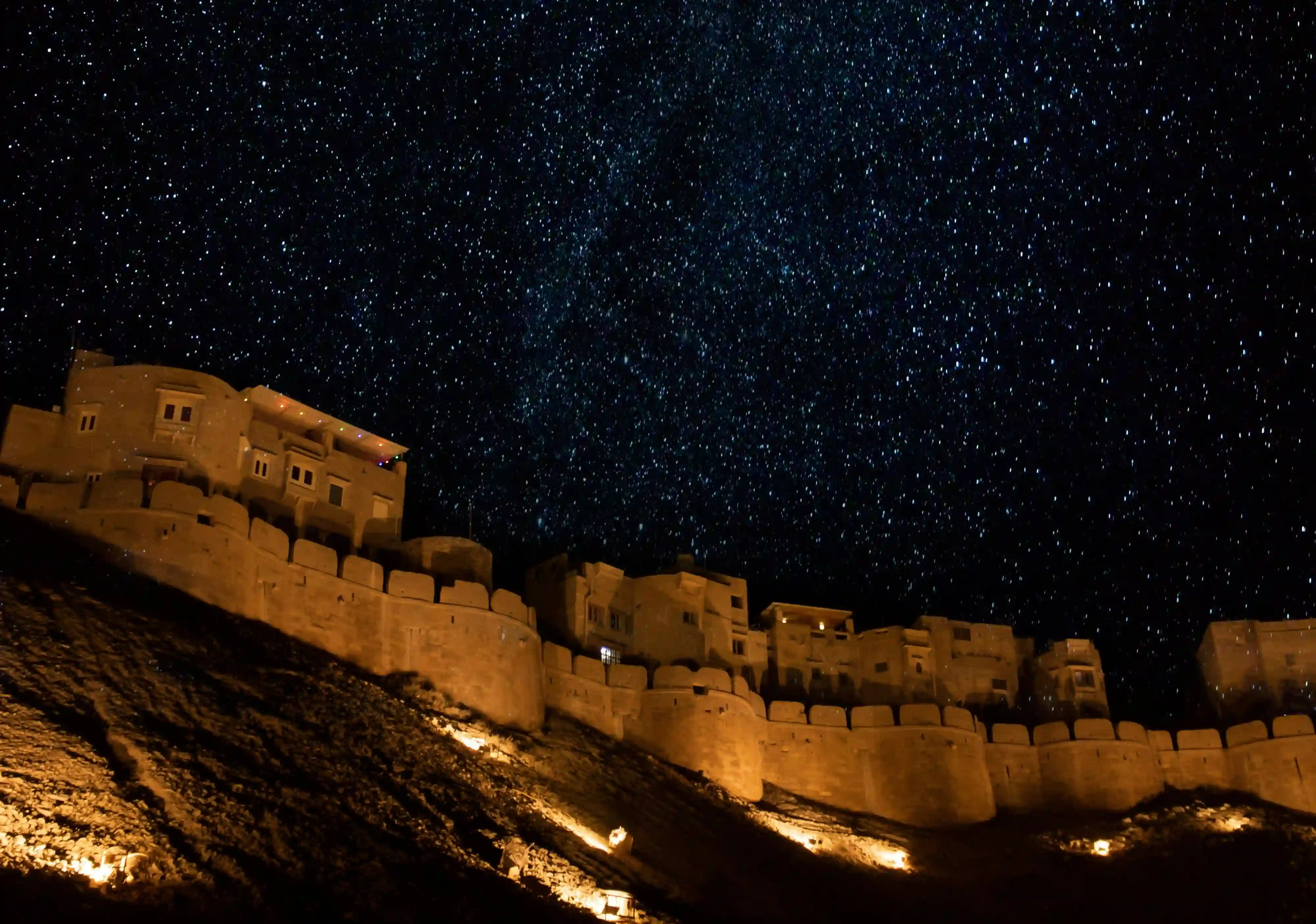
What saved it was that it is beautiful, and that the yellow sandstone it is built from turns molten gold for about twenty minutes every evening. That is what you are coming for, and it lives up to the photographs in a way that very few things do.
This guide is written from the route rather than from a brochure. Our Rajasthan tour packages end in Jaisalmer more often than anywhere else, and there is a reason for that — it is the emotional finish line of a Rajasthan trip. Below: what to see, how to choose a desert camp without getting burned, what things really cost in 2026, and the ethical questions nobody puts in a brochure.
H2: How many days do you need in Jaisalmer?
Two days and one night in the desert. That is the standard and it is standard because it works: one day for the fort, the havelis and the cenotaphs, one day for Kuldhara and the camp. Anything less and you are choosing between the city and the desert, which are the two halves of the same trip
• One day only: fort in the morning, havelis after lunch, Bada Bagh at sunset. You will see Jaisalmer and miss the Thar, which is the part people actually remember.
• Two days, one desert night: the right answer for almost everyone.
• Three days: adds Tanot Mata and Longewala, or a proper Desert National Park morning with a naturalist.
• Four or more: only for birdwatchers, photographers, or anyone who wants a second, quieter camp night away from the main dunes.
Jaisalmer Fort — the last living fort
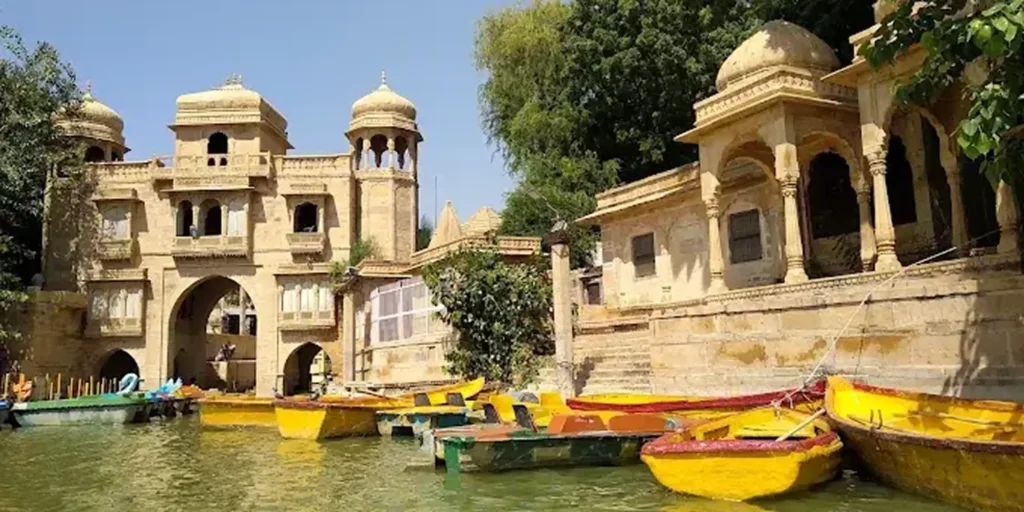
Jaisalmer Fort is not a monument. Roughly a quarter of the old city’s population still lives inside it — several thousand people, in houses their families have occupied for generations, with shops, temples, guesthouses and restaurants along the same lanes. It is one of the very few genuinely inhabited medieval forts left anywhere in the world, and it is part of the Hill Forts of Rajasthan UNESCO World Heritage listing alongside Chittorgarh, Kumbhalgarh, Ranthambore, Gagron and Amber.
Walking in through the four successive gates, past the cannon platforms, into the main square with its palace and Jain temple complex, you are walking into a neighbourhood rather than an exhibit. Cows push past you in lanes four feet wide. Someone’s laundry hangs above a twelfth-century doorway. It is the least museum-like great building in India.
What to see inside: the Raj Mahal palace museum, the seven interconnected Jain temples — eleventh to sixteenth century, extraordinary carving, restricted morning hours for non-Jain visitors — and the ramparts at sunset. Give it three hours minimum. Take a local guide for the Jain temples specifically; the iconography is dense and unlabelled and you will walk past most of it otherwise.
Should you stay inside Jaisalmer Fort?
Our answer is no, and this is the one recommendation in this guide we would ask you to take seriously. The fort was built with a drainage system designed for a few hundred residents and no plumbing. Modern hotel occupancy has pushed water use far beyond that, seepage has damaged the foundations, and sections of bastion have collapsed over recent decades. This is not a fringe concern: UNESCO’s own World Heritage Committee has repeatedly expressed concern that little progress was being made on the infrastructure works meant to stop water seeping into the fort mound, and the World Monuments Fund has listed the fort among the world’s most endangered sites. Conservation bodies have urged travellers for years not to sleep inside the walls.
What we recommend instead: visit the fort, eat inside it, spend hours there. Sleep in one of the restored havelis in the town below, most of which have rooftop views back toward the illuminated fort that are better than anything you get from inside it. You lose nothing and the building lasts longer.
This is a small choice that genuinely matters, and enough travellers making it will change the outcome.
Best places to visit in Jaisalmer
Everything below except Kuldhara and the Desert National Park is inside a fifteen-minute drive of the fort. Jaisalmer is a small city and its sights cluster tightly, which is why two days is enough.
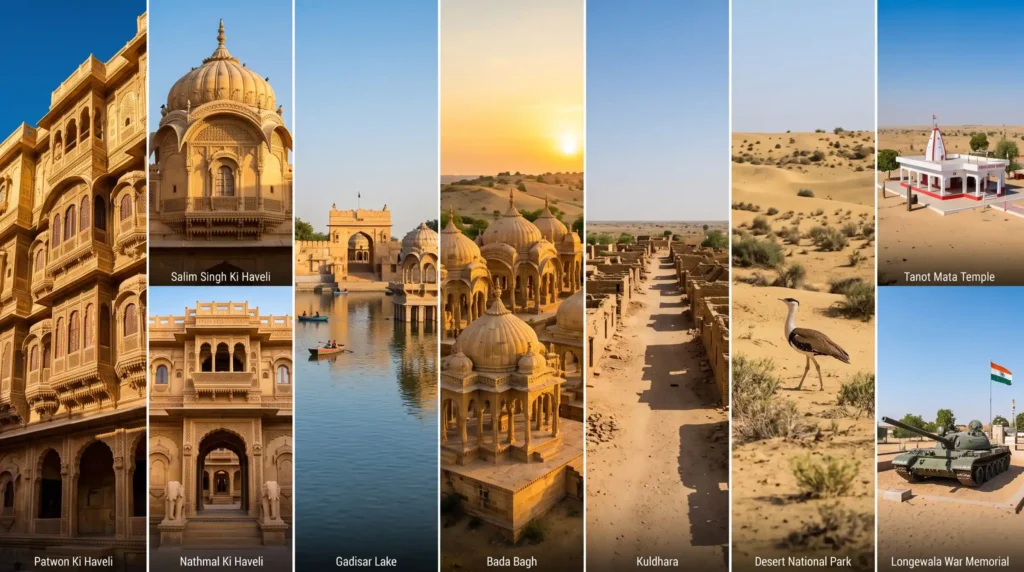
Patwon Ki Haveli
A cluster of five havelis built between 1805 and 1860 by a family that made its money in brocade and opium, and the finest stone carving in the city. The jharokha balconies are cut so finely the sandstone reads as lace. One section is a government museum; the others are privately run with separate tickets. If you are choosing only one, take the first haveli.
Salim Singh Ki Haveli and Nathmal Ki Haveli
Salim Singh’s haveli has a distinctive peacock-shaped upper storey and a genuinely sinister backstory involving a prime minister who taxed the town into revolt. Nathmal Ki Haveli was carved by two brothers working on opposite sides at the same time — the two halves are deliberately, visibly asymmetrical, and once you see it you cannot unsee it. Both are thirty-minute stops, best combined with Patwon Ki Haveli into one morning walk.
Gadisar Lake
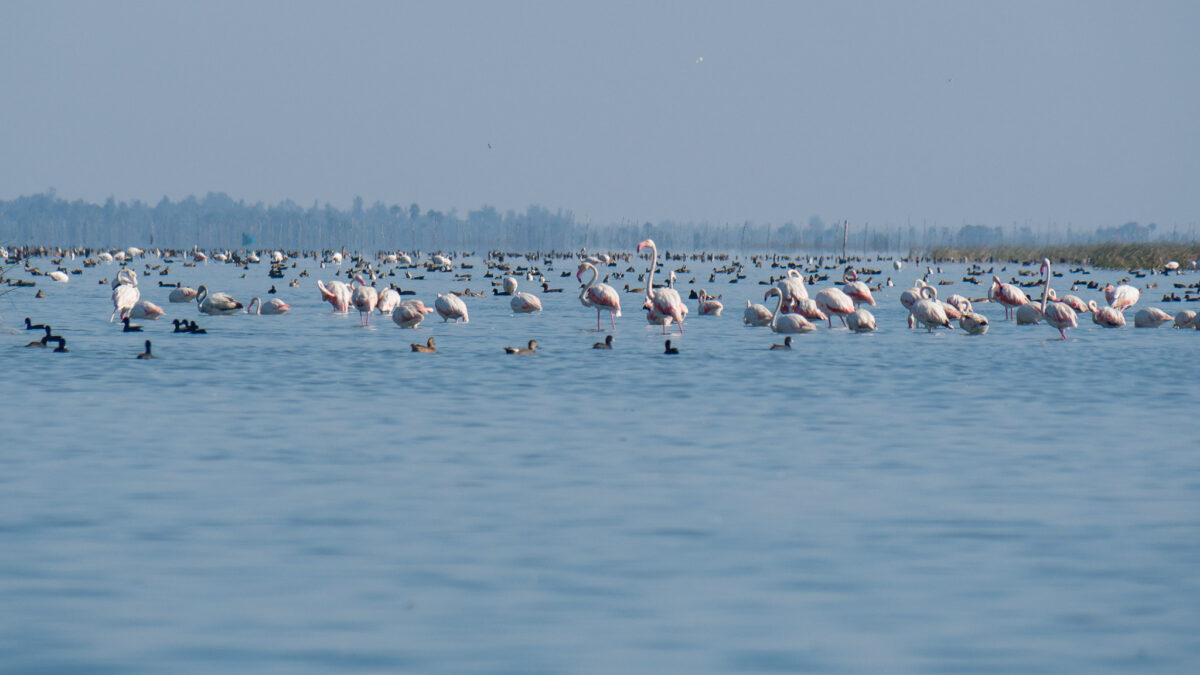
A fourteenth-century rainwater reservoir that kept Jaisalmer alive for six centuries, ringed with ghats, small temples and chhatris. Go at sunrise. The light is soft, migratory birds are on the water in winter, the boats are empty and the crowds have not arrived. It is the most peaceful hour you will spend in the city, and almost every itinerary schedules it at sunset instead, when it is busy and the light is behind you.
Bada Bagh
Six kilometres north, a hillside of royal cenotaphs in yellow sandstone standing in rows against open sky, with a line of modern wind turbines on the ridge behind them. The juxtaposition is strange and it photographs beautifully. Sunset here is quieter than the dunes and, for a lot of visitors, better — particularly if your desert night is the following day and you do not want two sunset dune trips in a row.
Kuldhara — the abandoned village
Eighteen kilometres out, a village abandoned overnight in the early nineteenth century by its entire Paliwal Brahmin population. The popular telling involves a tyrannical minister demanding the village chief’s daughter. Historians point instead at drought, water depletion and punitive taxation, which is less dramatic and more likely. Either way, roofless stone houses on an empty plain are genuinely atmospheric.
It has since acquired a ghost-story reputation and an evening tourist trade to go with it. The site is far more moving early in the morning with nobody in it.
Desert National Park and the Great Indian Bustard
About 45 km out, a protected area of desert grassland and dunes sheltering one of the last populations of the critically endangered Great Indian Bustard, along with chinkara, desert fox and raptors. It needs a permit and a proper naturalist to be worth doing. For most travellers it is optional. For birdwatchers it is the reason to come to Jaisalmer at all — and if wildlife is what you are here for, our Ranthambore tiger safari guide covers the other end of the Rajasthan wildlife circuit.
Tanot Mata and Longewala (full day)
Around 120 km toward the border, Tanot Mata is a temple maintained by the Border Security Force, known for the unexploded shells displayed inside from the 1965 and 1971 wars. Longewala nearby was the site of the 1971 battle and has a small war memorial with tanks and aircraft. It is a long day out and a strongly patriotic experience that Indian travellers rate very highly and foreign visitors often skip.
Permits and photo identity documents are required and must be arranged in advance through your operator. International visitors should read our India visa and travel guide before planning border-area travel, because the documentation you will be asked for is not the same as elsewhere in Rajasthan
How to choose a desert camp in Jaisalmer
This is where Jaisalmer trips go right or wrong. Read this section before you book anything.
Sam or Khuri — which sand dunes are better?
February brings the best combination of weather and lower crowds than the December peak.
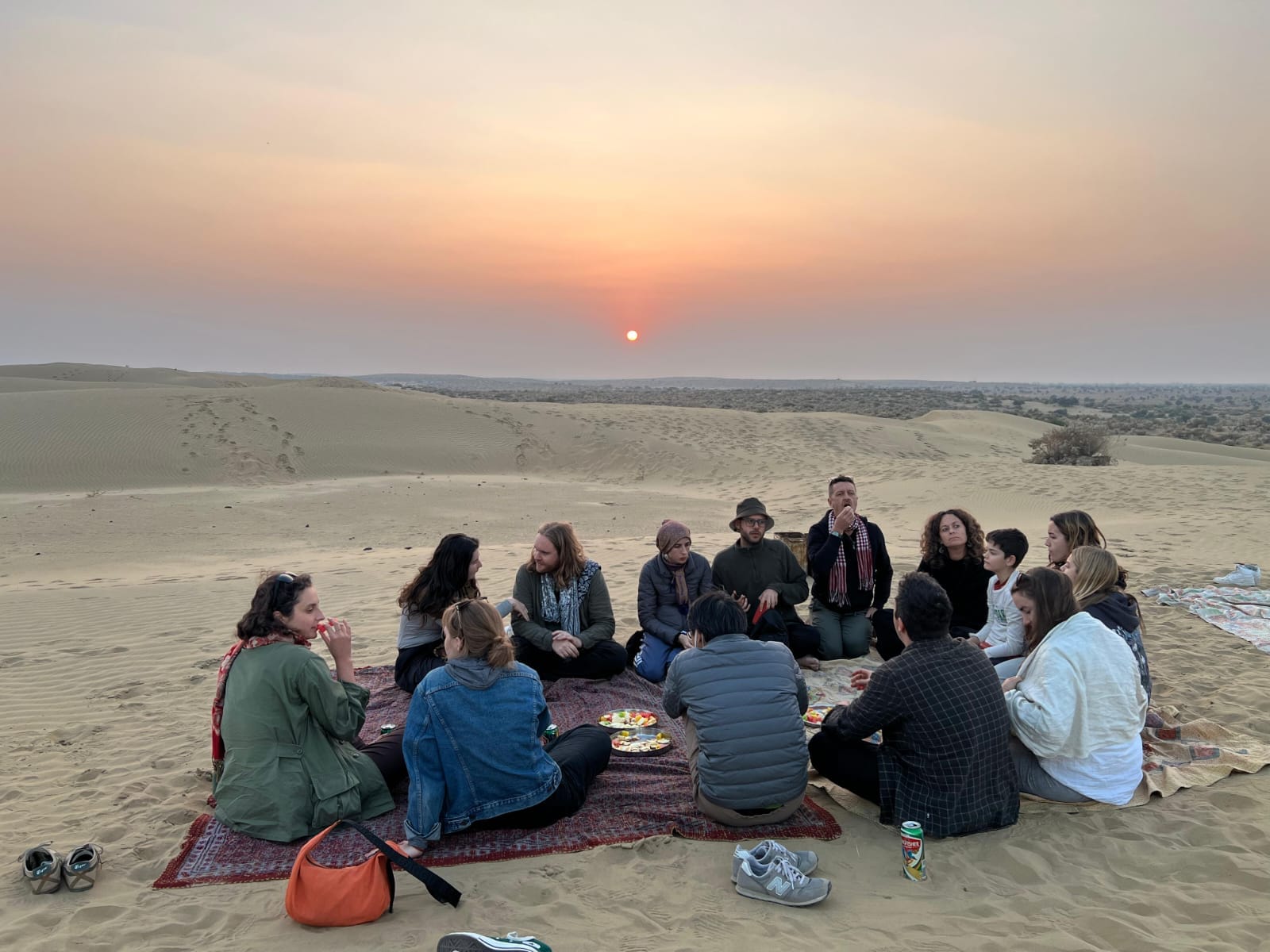
Sam Sand Dunes, about 42 km west, has the biggest dunes and the biggest crowds. In peak season the main dune area holds hundreds of jeeps, camels, tourists and loudspeakers at the same time. If your mental image of the desert is silence and empty sand, Sam in late December will not deliver it.
Khuri, about 45 km southwest, is smaller, quieter and more village-like. The dunes are less dramatic and the experience is considerably more peaceful.
Our honest recommendation: stay near Sam but choose a camp positioned well away from the main dune cluster, or go to Khuri if quiet matters more than scale. Then ask your operator one specific question — how far is this camp from the main dune activity area? That single question separates a good desert night from a bad one, and almost nobody asks it.
Camp tiers and what you actually get
• Basic (₹1,500–3,000 per person): shared or simple Swiss tents, common bathrooms, buffet dinner, folk performance, camel ride. Perfectly adequate for one night.
• Deluxe (₹4,000–8,000): private tents with attached bathrooms, better bedding, smaller groups, jeep safari included.
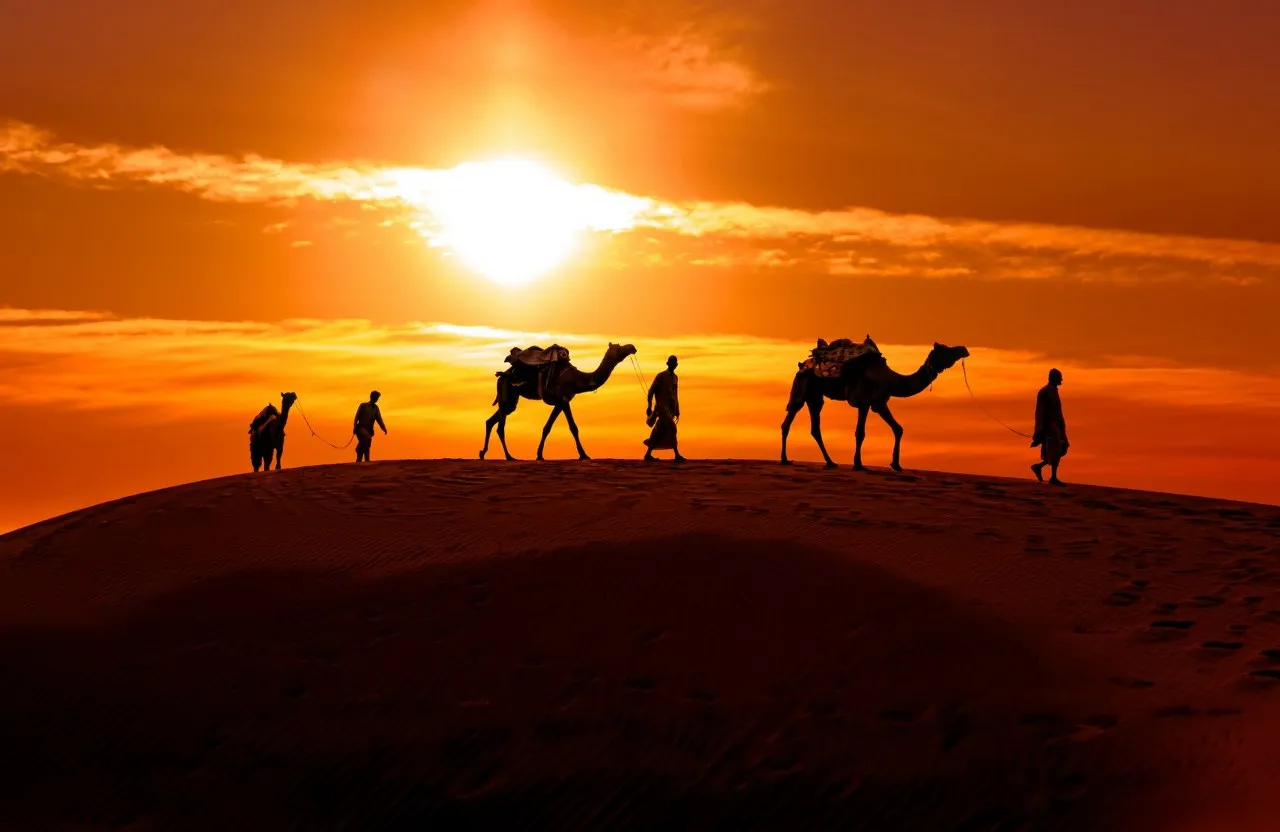
• Luxury (₹12,000–30,000+): proper canvas suites, private dining, remote locations well away from the crowds, sometimes stargazing setups. The gap between deluxe and luxury in Jaisalmer is wider than the price difference suggests, mostly because of location rather than furnishing.
Is a camel safari in Jaisalmer ethical?
It depends entirely on the operator, and that is not a dodge — standards vary enormously between camps a few kilometres apart. Some maintain their animals well. Some do not.
If you want to ride, look for camels in visibly good condition, ask about working hours and rest periods, and use an operator who owns their animals rather than sub-contracting to whoever is available at the dune that evening. If any of it feels wrong when you arrive, a jeep safari and a dune sunset without the camel ride is still a complete experience. Nobody should feel obliged, and no reputable camp will make you feel awkward about declining.
What a desert night actually involves
Jeep transfer out in the late afternoon, dune bashing if you have booked it, camel ride to a viewpoint for sunset, back to camp for folk music and dance around a bonfire, buffet dinner, sleep. The music is not filler — Manganiar and Langa musicians are a serious tradition, and a good camp books real ones. Our guide to Rajasthan’s traditions and festivals explains what you are listening to.
Then it gets cold. Single digits Celsius is normal in December and January, and the open desert feels colder than the thermometer because of wind and open ground. Bring a proper jacket, not a fleece, and confirm before booking that the camp provides heavy blankets or heating. This is the most common packing failure we see and it ruins the part of the trip people looked forward to most.
If you are building this into a wider trip, the Udaipur Jodhpur Jaisalmer tour package includes a desert night at camps we have inspected in person.
Perfect 2-day Jaisalmer itinerary
Day 1 — fort, havelis and cenotaphs
• Sunrise: Gadisar Lake (1 hr), before anyone else is up.
• Morning: Jaisalmer Fort — palace museum, Jain temples, ramparts (3 hrs).
• Lunch: rooftop restaurant inside the fort.
• Afternoon: Patwon Ki Haveli, Salim Singh Ki Haveli and Nathmal Ki Haveli on foot (2 hrs).
• Sunset: Bada Bagh cenotaphs.
• Evening: dinner on a rooftop facing the illuminated fort, then Sadar Bazaar for mirror-work textiles and camel leather.
Day 2 — Kuldhara and the desert
• Early morning: Kuldhara before the crowds, then Amar Sagar.
• Afternoon: transfer to the camp near Sam or Khuri.
• Late afternoon: jeep safari and camel ride out to the dunes for sunset.
• Evening: folk performance, dinner under the stars, overnight in camp.
• Next morning: sunrise over the dunes, then the drive back.
If you have a third day
Add Tanot Mata and Longewala as a full day, or a Desert National Park morning with a naturalist. Both are better uses of a third day than a second night at the same camp. If your third day is really a transit day, the drive east toward Jodhpur has more in it than the map suggests and is worth starting early rather than late.
Best time to visit Jaisalmer
November to February, strictly. Jaisalmer has the narrowest good-weather window in Rajasthan and getting it wrong ruins the trip. Days in that range run 22–30°C and are genuinely pleasant; nights drop to 5–10°C in the open desert. October and March work at the edges.
February is the standout month — warm days, tolerable camp nights, and the Jaisalmer Desert Festival on the Sam dunes, three days of camel races, turban-tying competitions and folk music. Dates move with the lunar calendar, so confirm on the Rajasthan Tourism site before booking flights.
April to June is severe — 42–48°C, sandstorms in May and June, and most desert camps closed. Do not plan a Jaisalmer trip in that window. For the full month-by-month picture across every Rajasthan city, see our best time to visit Rajasthan guide.
How to reach Jaisalmer
By road: is the standard approach. Jaisalmer sits about 285 km from Jodhpur — roughly five hours on a good, straight highway — 560 km from Jaipur and 660 km from Udaipur. The Jodhpur to Jaisalmer cab is the route almost every visitor takes, and the drive across the open Thar is part of the experience rather than something to endure.
By train, Jaisalmer station connects to Jodhpur, Jaipur and Delhi. The overnight Delhi–Jaisalmer service is popular and books out well in advance through winter. It is a comfortable and genuinely atmospheric way to arrive
By air: , Jaisalmer station connects to Jodhpur, Jaipur and Delhi. The overnight Delhi–Jaisalmer service is popular and books out well in advance through winter. It is a comfortable and genuinely atmospheric way to arrive
Building it into a circuit. The practical sequence for most itineraries is Jaipur → Jodhpur → Jaisalmer → Udaipur, or the reverse. Coming from Jaipur, the Jaipur to Jodhpur cab covers the first leg; from the lake city, the Udaipur to Jodhpur cab does. If you are starting from Delhi, our Delhi to Jaipur cab guide explains that opening stretch, and many travellers break the Jaipur leg at Pushkar using the Jaipur to Pushkar cab.
Each city on that circuit has its own guide: Jaipur, Jodhpur, Udaipur, and — for the version of the loop that fits into a week — our 7-day Rajasthan itinerary
What Jaisalmer actually costs
Per person, per day, excluding intercity transport and the desert camp night.
• Budget (₹1,500–2,800/day): guesthouse in the town below the fort, local restaurants, autos, main monuments, basic desert camp.
• Mid-range (₹3,500–6,500/day): restored haveli hotel, rooftop dining, private cab for sightseeing, deluxe camp with jeep safari.
• Luxury (₹15,000+/day): premium heritage property in town plus a luxury camp in a remote location.
Jodhpur is meaningfully cheaper than Udaipur and Jaipur at every tier — usually 20 to 30 percent less for comparable quality. It is the best value city in the Rajasthan circuit.
Jaisalmer is the cheapest of the major Rajasthan cities for accommodation and food. The desert camp is the exception and it is a separate line item that ranges from ₹1,500 to ₹30,000 per person for a single night depending on tier — a twenty-fold spread, which is unlike anything else on a Rajasthan trip.
Where people get caught out: camel and jeep safari charges quoted separately from the camp rate; entry fees at privately run haveli sections; and “sunset point” charges at the dunes. Ask for an all-inclusive quote in writing before you commit, and ask specifically whether the camel ride is included.
Where to spend: a camp positioned away from the crowds, and a local guide inside the fort who can read the Jain temple carvings. Where to save: the town’s food is excellent and inexpensive, so there is no reason to eat in your hotel.
Our complete Rajasthan travel guide breaks costs down across the full circuit.
What to eat in Jaisalmer
• Ker sangri — desert berries and beans, slow-cooked, sour and salty. The signature Marwari dish and genuinely local rather than tourist-facing.
• Dal baati churma — the Rajasthani classic. Have it once at a proper restaurant, not at a camp buffet.
• Gatte ki sabzi — gram-flour dumplings in yoghurt curry. What people here actually eat at home.
• Makhania lassi and kesar chai — both better in the town below the fort than on the fort’s main lane.
• Camel milk — sold near the dunes and worth trying once, with the warning that it is an acquired taste.
The desert-camp buffet is not where you will eat well. Camps cater to large groups and cook accordingly. Eat properly in town before the transfer out.
Local tips most Jaisalmer travel guides leave out
Book the camp through someone accountable. Jaisalmer has a large informal touting industry. A camp sold on the street or by a hotel tout at forty percent off is frequently not the camp in the photographs, and there is no recourse once you are 42 km out in the dark. Book through a named operator with a traceable business.
Sunrise beats sunset at Gadisar and Kuldhara. Everyone does sunset at both. The morning versions are emptier, softer and better.
Carry lip balm, sunscreen and more water than you think. The desert air is extremely dry year-round, including in winter, and dehydration in cool weather catches people out because they do not feel hot.
Mind the border-area rules. Photography near military installations is prohibited. On the Tanot and Longewala route, carry government photo ID and follow your driver’s instructions about where not to stop. These are not soft guidelines.
Buy away from the fort’s main lane. Mirror-work embroidery, camel leather and Rajasthani puppets are all good buys in Jaisalmer, and prices inside the fort’s main tourist strip are the highest in the city.
Shoes off, shoulders covered in the Jain temples, and check the entry window — non-Jain visitors are typically admitted only during limited morning hours.
Cash still matters. UPI works in town. Small dune vendors, camel handlers and village stops often do not have it.
Frequently asked questions
How many days do you need in Jaisalmer?
Is Jaisalmer Fort worth visiting?
Sam or Khuri — which desert camp location is better?
What is the best time to visit Jaisalmer?
Is a camel safari in Jaisalmer ethical?
How cold does the Jaisalmer desert get at night in winter?
How far is Jaisalmer from Jodhpur?
Is Jaisalmer safe, given it is near the border?
Jaisalmer or Jodhpur — if I can only do one?
Can I visit Jaisalmer on a honeymoon?
Plan your Jaisalmer trip with Root Indians
The two things that decide whether a Jaisalmer trip is memorable or merely fine are the camp you sleep in and the operator who drives you there. Both are exactly what we control.
Root Indians runs its own AC fleet across western Rajasthan with background-verified drivers who have made the Jodhpur–Jaisalmer run hundreds of times. We work with desert camps we have inspected in person, at every price tier, and we quote all-inclusive so there are no surprises at the dune
Whether you want a two-night desert add-on, the full Rajasthan circuit across Jaipur, Jodhpur, Jaisalmer and Udaipur, or a luxury camp for a honeymoon, we will build it around your dates and budget.
Browse our cab routes across Rajasthan if you only need the transfers, or call +91 78777 38437 and tell us your dates for a custom itinerary within 24 hours.